
Auto Transport Calculator
Prices are estimates only. Actual shipping costs may vary based on current market conditions, seasonal demand, and carrier availability. Pricing calculated based on vehicle make, model, and size category.
Auto Transport Calculator
Instantly Estimate
If you're searching for how much does it cost to ship a car, you're not alone. Whether you're relocating, buying a vehicle from another state, or sending a car to a family member, pricing is the first thing most people want to know. That's exactly where an auto transport cost calculator comes in.
The Tool
What Is an
Auto Transport Cost Calculator?
An auto transport cost calculator is an online tool that provides an estimated vehicle transport pricing based on the details of your shipment.
Instead of guessing or calling multiple companies, you enter basic information — and within seconds, the system generates a projected car transport rate.
// Instant Quote Preview
Transparency
Auto transport price calculator is nothing but a non-binding rough estimate of your auto transport cost. As you submit the basic information, the cost calculator will reveal the estimation of what it will cost you to ship your auto. It's quick and simple — no personal information is required to see your car transport price quote. As you hit calculate, you will find the estimated value — no pop-ups, no advertising gimmicks — just a genuine ballpark figure. You will be able to find our handpicked list of companies with instant prices, call their numbers or click their profile link to read reviews, and decide on any one of them for shipping your automobile.
The Process
How Does a Car Transport
Price Calculator Work?
Behind the scenes, it uses logistics data, route trends, and market-based pricing models to estimate your cost.
Distance Calculation
Mileage between pickup and delivery. Longer routes lower the per-mile cost but increase total shipping cost.
Route Demand Analysis
High-demand metro routes often cost less due to frequent carrier availability. Rural routes may cost more.
Vehicle Type & Size
Larger vehicles take up more trailer space and weigh more — and both affect pricing.
Transport Type
Open transport is more affordable. Enclosed transport costs more due to limited capacity and added protection.
Market Conditions
Fuel prices, seasonality, and carrier availability impact vehicle transport cost daily.
Before You Ship
Pre-Transport Inspection & Documentation
Preparing a vehicle properly before shipment directly impacts shipping efficiency, inspection accuracy, and claim protection. While car shipping price calculators estimate cost based on route and vehicle data, preparation standards determine operational smoothness and post-delivery satisfaction.
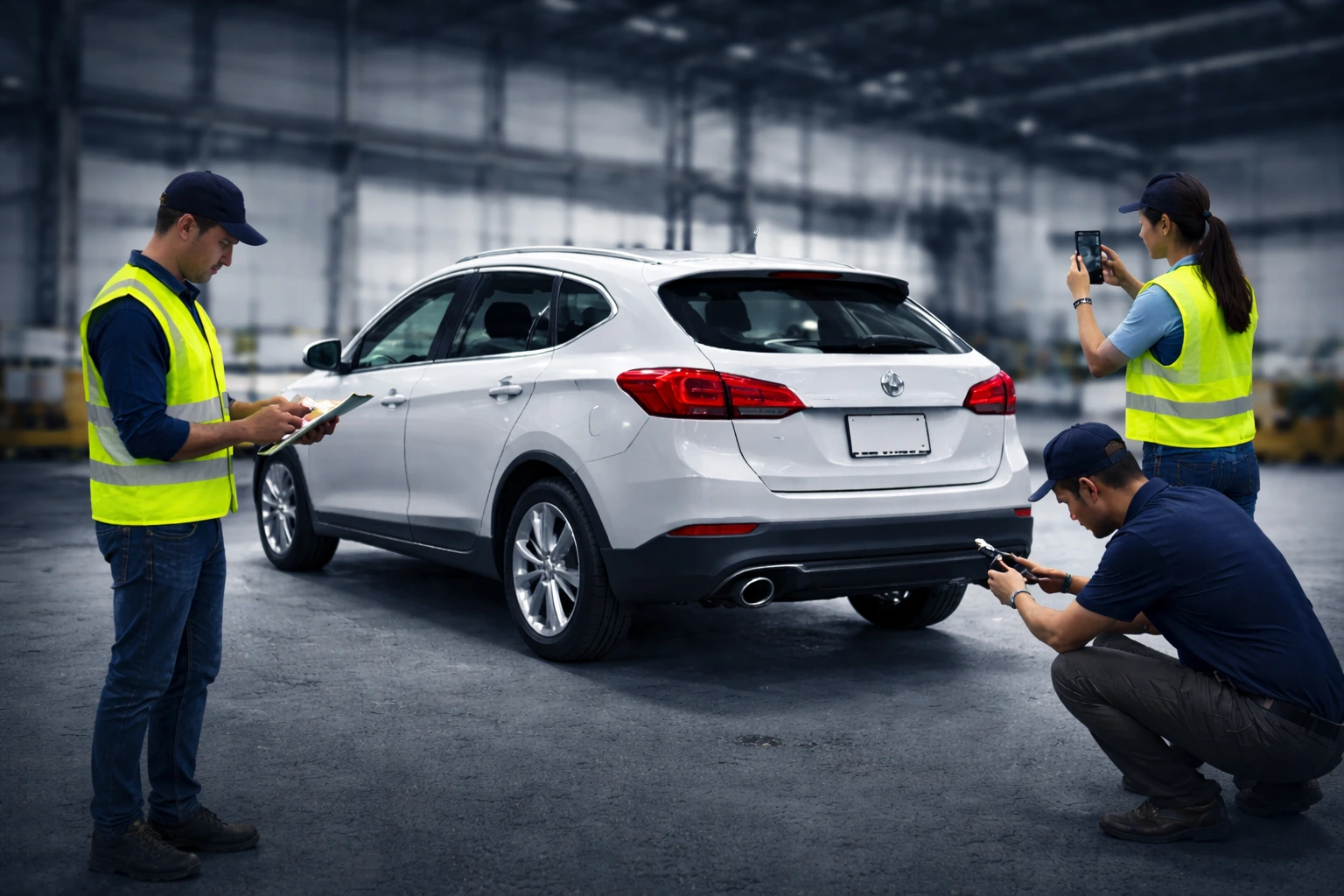
Before pickup, vehicles should be thoroughly cleaned — a clean exterior allows carriers to perform accurate condition inspections. Dirt and debris can conceal pre-existing dents or scratches, complicating documentation. Inspection transparency is critical in professional auto transport services.
Pre-Shipment Prep
Before Pickup
Thorough Exterior Cleaning
A clean exterior allows carriers to perform accurate condition inspections. Dirt and debris can conceal pre-existing dents or scratches, complicating documentation and claims.
Timestamped Photo Documentation
Capture images from all angles — front, rear, sides, roof, wheels. Personal documentation strengthens claim validation if discrepancies arise upon delivery.
Mechanical Preparation
Verify functional brakes, properly inflated tires, and secure batteries. For inoperable vehicles, accurate disclosure is essential — non-running vehicles require specialized loading equipment.
Set Fuel Level to Quarter Tank
Excess fuel increases vehicle weight, affecting load distribution and regulatory compliance. Maintaining approximately one-quarter tank enhances transport safety and efficiency.
Remove All Personal Belongings
Federal regulations restrict carriers from transporting household goods inside vehicles. Personal items add weight and increase liability exposure. Clearing the interior also prevents shifting objects during transit.
Disable Alarms & Secure Components
Alarm systems should be disabled to prevent battery drainage or transit disruptions. Foldable mirrors and retractable antennas should be secured to avoid incidental damage.
Post-Delivery Inspection
Upon Arrival
Inspect Before Signing
Customers should conduct a thorough inspection before signing the final Bill of Lading. Do not accept delivery until the vehicle has been properly assessed in adequate lighting.
Compare Against Pickup Documentation
Reference your timestamped photos and the original pickup Bill of Lading. Compare the vehicle's condition point-by-point to confirm accuracy and identify any transit changes.
Record Any New Damage Immediately
Any new damage must be recorded immediately to initiate insurance claims properly. Note damage on the delivery Bill of Lading before the carrier departs — delays can complicate claim eligibility.
Confirm Delivery Documentation
Retain all delivery paperwork. Understanding the inspection and documentation process reinforces transparency in auto transport services and protects your financial investment during vehicle shipping.
How to File a Damage Claim
If you have noted any new damage on the delivery Bill of Lading, you must initiate a formal claim to process it with the carrier's insurance.
• Gather Your Documentation: Collect the signed Bill of Lading, your pickup photos, and the new photos of the damage.
• Contact Claims Department: Notify our claims team within 24 hours of delivery.
• Submit Your Claim: Visit our online portal to submit all required documents and initiate the claims process.

Bill of Lading
Official Inspection Agreement
The Bill of Lading serves as the official inspection agreement between customer and carrier. Maintaining personal documentation alongside this form strengthens claim validation if discrepancies arise. Customers who follow preparation guidelines reduce shipment delays, minimize dispute risk, and protect their financial investment during vehicle shipping.
1/4 Tank Fuel Rule
Excess fuel increases weight and affects regulatory compliance during transport.
Disable Alarm
Prevents battery drain and disruptions during loading, transit, and unloading.
Clear Interior
Federal regulations prohibit household goods in vehicles. Items shift and add liability.
Fold Mirrors
Retract antennas and secure mirrors to avoid incidental damage during loading.
By combining accurate pricing evaluation, strategic shipping method selection, and disciplined preparation standards, customers gain full control over their auto transport experience while ensuring cost efficiency and shipment security.
Shipping Methods
Door-to-Door
vs Terminal-to-
Terminal
Choosing the right shipping method is a critical decision after receiving an auto transport quote. Two primary delivery models dominate the industry — each impacting cost structure, scheduling flexibility, and logistical coordination. Evaluating delivery method options alongside an instant car shipping quote ensures a comprehensive view of vehicle transport planning.
Door-to-Door Auto Transport
Door-to-door auto transport is the most popular shipping option because it maximizes convenience. Carriers pick up and deliver vehicles as close as safely possible to specified addresses. While exact driveway access may depend on road width and local restrictions, this method minimizes customer coordination and additional travel. Because of its efficiency and customer preference, door-to-door shipping has become the standard model in modern car transport services.
For customers relocating long distances, door-to-door car shipping enhances efficiency by synchronizing with moving schedules, eliminating the need for separate transportation to and from a facility.
Address
Pickup
Address

Terminal-to-Terminal Vehicle Shipping
Terminal-to-terminal auto transport involves dropping off and picking up vehicles at designated storage hubs. These facilities serve as consolidation points where carriers load and unload multiple vehicles. Terminal shipping may reduce certain logistical constraints, particularly in dense urban environments where large trailers face access limitations.
Terminal storage introduces additional handling stages. Each vehicle movement — loading, unloading, repositioning — creates minor but cumulative risk exposure. In many regions, terminal networks have diminished as door-to-door services expanded, making this option less common for individual shipments.
Address
Terminal
Terminal
Address

Side-by-Side Method Comparison
Transparent base rate. No hidden storage or indirect fees. Total cost is generally more predictable.
✓ More PredictableMay appear lower initially, but storage fees, holding periods, and indirect costs (rideshare, rental) often offset savings.
Variable Total CostBroader flexibility. Carriers operate along optimized regional routes, offering wider pickup and delivery windows.
✓ More FlexibleRelies on alignment between terminal storage capacity and carrier timing, which can introduce delays.
Capacity DependentFewer transfer points. Reduced loading and unloading stages means lower cumulative damage risk overall.
✓ Lower RiskEach movement — loading, unloading, repositioning — creates minor but cumulative risk exposure across additional handling stages.
Additional ExposurePickup and delivery near your address. No separate transportation to or from a facility is required.
✓ Maximum ConvenienceRequires separate transportation to and from terminals — rideshare, rental, or time off work adds indirect cost and effort.
Separate Transit NeededIndividual relocations, long-distance moves, and customers who prioritize convenience, predictable pricing, and lower risk.
✓ Individual ShipmentsUrban and commercial fleet shipments where bulk staging and batch processing offer structured dispatch advantages at scale.
Fleet / Bulk TransportUltimately, the optimal method depends on route accessibility, customer flexibility, and total logistical cost — not just base auto transport pricing. Evaluating delivery method options alongside an instant car shipping quote ensures a comprehensive view of vehicle transport planning.
Pricing Variables
What Factors Affect Car Transport Costs?
If you're asking "Why does the price change?" — here's your answer. Every variable below plays a measurable role in determining your final rate.
Distance
Distance is one of the biggest pricing factors. However, shipping 2,000 miles doesn't cost double 1,000 miles. Long-haul routes reduce empty miles for carriers, making them more efficient — so the per-mile rate actually drops with distance.
Key Factor #1Vehicle Type & Weight
Sedans cost less to ship than SUVs, pickup trucks, vans, and oversized vehicles. Inoperable vehicles also cost more due to special loading equipment requirements.
Key Factor #2Transport Type
Open transport is more affordable and faster to book. Enclosed transport costs more due to limited capacity and added protection — ideal for high-value vehicles.
Key Factor #3Seasonality & Demand
Auto transport pricing fluctuates throughout the year. Summer months and snowbird season drive higher demand and higher rates. Being flexible with your dates can sometimes reduce your vehicle transport cost.
Key Factor #4Fuel Prices
Fuel is one of the largest operational expenses for carriers. When diesel prices rise, vehicle transport pricing generally increases. When fuel stabilizes, rates may adjust accordingly.
Key Factor #5Market & Economics
Carrier availability, weather disruptions, national transport demand, and regulatory changes all influence the final rate. A quality auto transport quote tool accounts for these real-time variables.
Key Factor #6Transport Types
Open vs Enclosed Auto Transport
Two distinct methods, two different price points. Your car transport cost estimator should clearly show the difference between these options.
Open Auto Transport
- Most common method
- Vehicles transported on open-air carriers
- More affordable
- Faster carrier availability
Enclosed Auto Transport
- Fully covered trailers
- Protection from weather and road debris
- Ideal for luxury, classic, or exotic vehicles
- Higher cost — typically 30-60% more than open transport
Cost Breakdown
How Much Does It Cost to Ship a Car?
While pricing varies based on distance and market conditions, here's how costs typically scale. These are general benchmarks — your vehicle transport cost depends on the factors above.
Short Distance
0–500
miles
Base Rate Pricing
Medium Distance
500–1K
miles
+15–25% from base
Long Distance
1K–2K
miles
+25–40% from base
Cross-Country
2000+
miles
+40–60% from base
Seasonality & Market Demand
Auto transport pricing fluctuates throughout the year. Higher demand often increases car transport rates. Being flexible with your dates can sometimes reduce your vehicle transport cost.
Peak Seasons
- Summer months
- Snowbird season (fall & spring)
- Northern to southern migration
Off-Peak Seasons
- Winter months
- Lower relocation activity
- More competitive pricing
Fuel & Economic Factors
Fuel is one of the largest operational expenses for carriers. When diesel prices rise, vehicle transport pricing generally increases. When fuel stabilizes, rates may adjust accordingly.
Other influences include:
- Carrier availability
- Weather disruptions
- National transport demand
- Regulatory changes
Important Notice
Why Auto Transport Estimates Are Non-Binding
Here's something many customers don't realize: An auto transport price calculator provides an estimate based on current market conditions, but the market moves. Your final price depends on:
- Carrier acceptance
- Exact scheduling
- Route changes
- Market shifts between quote date and booking date
That said, a reputable company uses data-driven models to ensure your estimate is accurate and competitive — not misleading. Transparency builds trust.
Understanding Differences
Why Quotes May Vary Between Companies
You might receive different pricing from different providers. Here's why:
Broker vs Carrier Model
Brokers connect customers with carriers nationwide. Carriers operate their own trucks. Each has different cost structures.
Network Size
Larger networks may secure better rates on popular routes due to higher carrier competition and volume.
Service Level
Some companies include premium communication, real-time tracking, and comprehensive insurance options.
Speed Requirements
Expedited transport costs more. Standard scheduling offers the most competitive pricing.
Why Use It
Benefits & How to Use the Cost Calculator
Why use a car transport cost calculator instead of calling around? And how do you use it effectively to get the most accurate online car transport quote?
Key Benefits
Instant Pricing Clarity
Know your estimated cost immediately without waiting on emails or phone calls.
Transparent Expectations
Understand pricing factors upfront so there are no surprises along the way.
Budget Planning
Make relocation or purchase decisions confidently with a realistic cost estimate in hand.
Compare Transport Options
See open vs enclosed pricing instantly, side by side, to make the right call for your vehicle.
No Pressure
Most calculators provide estimates without requiring commitment. It puts control back in your hands.
Step by Step
How to Use a Car Transport Cost Estimator Effectively
To get the most accurate online car transport quote, follow these tips. Accuracy in your input equals accuracy in your estimate.
Enter Exact ZIP Codes
Enter exact pickup and delivery ZIP codes for the most precise distance calculation.
Select the Correct Vehicle Type
Choose the right vehicle category — sedan, SUV, truck, van — as this directly affects your rate.
Indicate Operability
Indicate if the vehicle is operable — inoperable vehicles require special loading equipment and cost more.
Compare Open and Enclosed Options
Compare open and enclosed options side by side to find the right balance between cost and protection for your vehicle.
Building Trust Through Transparent Pricing
Transport a vehicle isn't just about price. It's about safety, reliability, communication, insurance coverage, and timely delivery. A trustworthy car transport cost estimator reflects real market data — not bait-and-switch pricing.
Look for companies that:
Ready for Your Instant
Auto Transport Quote?
If you're still wondering how much does it cost to ship a car, the fastest way to find out is simple: Use the auto transport price calculator now. In just seconds, you can receive a transparent, data-driven auto transport quote tailored to your route, vehicle, and schedule.
An auto transport cost calculator is more than just a pricing tool — it's your starting point for a smooth and confident car transport experience. It helps you understand market rates, compare transport options, plan your budget, and avoid pricing surprises. Whether you're relocating, buying a vehicle online, or transporting a car across the country, getting an instant auto transport quote empowers you to move forward with clarity. Get your online car transport quote today and see exactly what your transport could cost.