
Car shipping insurance is an important part of transporting a vehicle, but coverage is not always as simple as customers expect.
The amount of protection can depend on the carrier’s policy, the cause of damage, the shipping agreement and the condition documented during pickup. Before handing over your vehicle, it is important to understand exactly what the transport company’s insurance covers.
What Does Car Shipping Insurance Usually Cover?
A carrier’s cargo insurance may cover physical damage caused while the vehicle is under the carrier’s control.
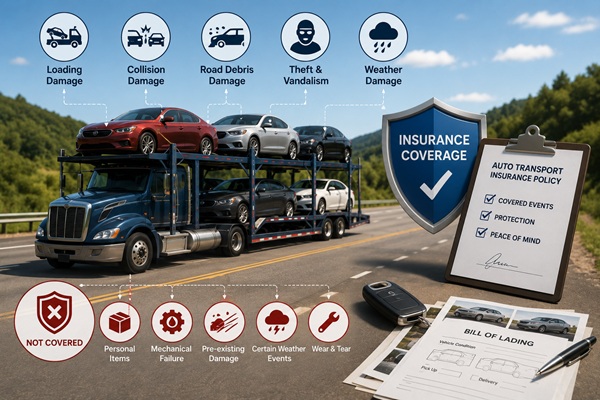
Depending on the policy, covered incidents may include:
- Damage caused during loading or unloading
- Scratches or dents caused by carrier equipment
- Damage resulting from a collision
- Damage caused by another transported vehicle
- Theft or vandalism while in the carrier’s possession
Coverage limits and exclusions vary between companies. A policy may also include a deductible or a maximum amount payable for each vehicle.
FMCSA requires certain motor carriers to maintain minimum levels of financial responsibility, but public-liability insurance should not automatically be treated as proof that your vehicle has full cargo coverage. Most general property carriers are not federally required to file cargo insurance with FMCSA, making direct verification particularly important.
What May Not Be Covered?
Car shipping insurance may exclude damage that was not caused by the carrier.
Common exclusions can include:
- Existing scratches, dents or mechanical problems
- Personal belongings left inside the vehicle
- Loose or aftermarket accessories
- Damage caused by leaking fluids
- Mechanical or electrical failure
- Damage caused by an undisclosed vehicle modification
- Normal wear and tear
- Certain severe weather events
Coverage for weather-related damage can vary. Customers using open transport should ask whether damage from hail, wind or road debris is covered.
Carrier Insurance vs Broker Protection
An auto transport broker normally arranges the shipment but does not physically transport the vehicle. The motor carrier assigned to the order is generally the company responsible for moving the car.
Customers should request the actual carrier’s insurance information—not only the broker’s registration or bond details.
Ask for:
- The carrier’s legal business name
- USDOT and motor-carrier numbers
- Insurance-company details
- Cargo coverage limit
- Policy expiration date
- Applicable deductible
- Written exclusions
FMCSA provides public tools for reviewing interstate carrier authority and insurance filings. However, customers should also request a current insurance certificate directly from the transport company.
Why the Bill of Lading Matters
The Bill of Lading records the vehicle’s condition at pickup and delivery.
Before the car is loaded:
- Wash the vehicle
- Photograph every side
- Record existing scratches and dents
- Check the wheels, windows, mirrors and roof
- Make sure the driver documents all existing damage
At delivery, inspect the vehicle before signing the final paperwork. If you notice new damage, record it on the Bill of Lading and take clear photographs immediately.
Federal rules governing interstate property claims require written claims and supporting information. Documents such as the Bill of Lading, proof of value and repair estimates may be needed during the investigation.
What Should You Do If Damage Occurs?
Contact the carrier as soon as possible and request its claims procedure.
Provide:
- Pickup and delivery photographs
- The signed Bill of Lading
- A written description of the damage
- Repair estimates
- Transport agreement and payment records
Do not repair the vehicle before the insurance company has had an opportunity to inspect the damage, unless immediate repairs are necessary for safety.
Final Thoughts
Car shipping insurance can provide valuable protection, but customers should never assume that every type of damage is automatically covered.
Verify the actual carrier’s insurance, read the exclusions and document the vehicle carefully before pickup. These simple steps can make a major difference if you need to submit a damage claim.
Transport Rankings helps customers compare auto transport companies, examine reviews and choose reliable providers for safer vehicle shipping.